The yarn is ready, the hook is in hand, and you are standing at the edge of a project waiting for that final, transformative touch. There is a specific kind of magic that happens when a simple crochet piece begins to take shape, but nothing quite compares to the moment you add a border that turns a good project into a great one. Today, we are diving into the Pom Pom Crochet Border, a playful edging that adds texture and whimsy to any creation. Whether you are finishing a cozy blanket or a wearable garment, this border brings a tactile joy that is as fun to make as it is to look at.
Why This Project Works
The appeal of the pom pom border lies in its deceptive simplicity. While it looks like a complex, high-effort finish, it is actually built on a straightforward repeat that relies on rhythm rather than complicated math. This border adds a squishy, three-dimensional texture that elevates the visual interest of flat pieces like afghans or the edges of sweaters. It is a versatile finishing touch that works beautifully with a variety of yarn weights, though it shines brightest when you want to add a pop of fun to a neutral base. By mastering just one special stitch—the cluster—you unlock a border that feels professional yet incredibly accessible.
Project Overview
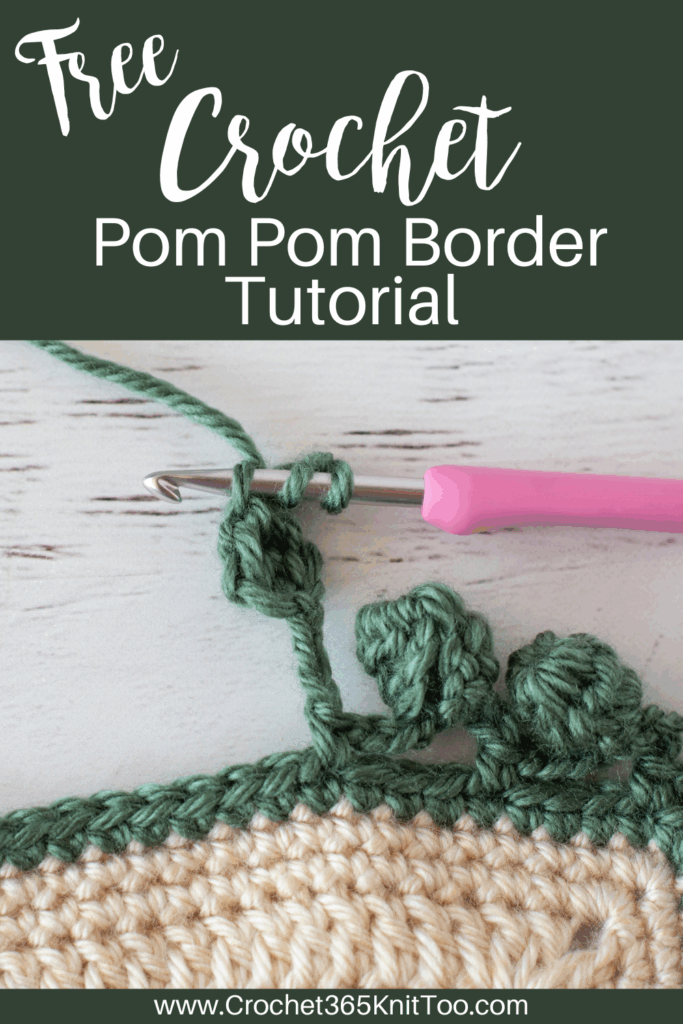
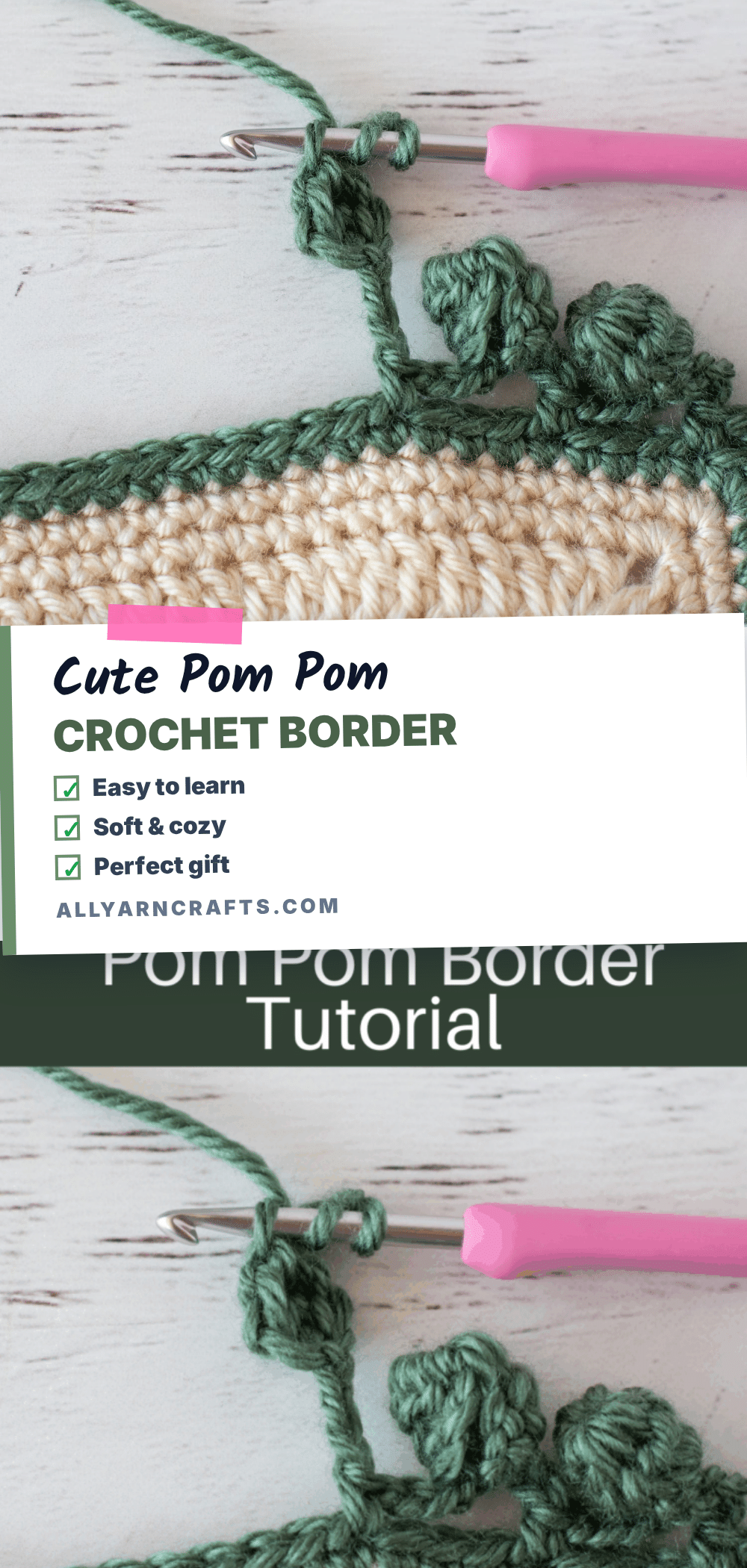
This pattern focuses on adding a decorative pom pom edging to an existing crochet piece, such as an afghan or a garment. The border is worked in rounds or along straight edges, utilizing a specific cluster stitch technique to create the “pom pom” effect. It is designed to be adaptable, allowing for adjustments if your stitch count does not perfectly align with the pattern’s requirements.
Materials
While specific yarn and hook recommendations depend on your base project, you will need:
- Your finished crochet piece (afghan, sweater, or flat piece).
- Yarn in your chosen accent color for the border.
- A crochet hook appropriate for your yarn weight.
- A tapestry needle for weaving in ends.
Gauge and Finished Size
Gauge and finished size are determined by your base project. The border itself is flexible; its final appearance depends on the number of stitches available on your piece and the spacing you choose between pom poms.
Abbreviations
- sc: Single crochet
- ch: Chain
- sl st: Slip stitch
- 3dcc: 3 double crochet cluster (see Special Stitches below)
Pattern Notes
- A pom pom border works best after a round or two of single crochet.
- If working a pom pom border as an edging to a garment or a flat piece, it is fairly straightforward as the stitch repeat is 4.
- As long as your total stitches are divisible by 4, the pom pom border will work out perfectly.
- If it is not, you can either adjust the prior row to have fewer or less stitches to accommodate or pick a couple of spots where you skip 2 stitches instead of 3 to ‘fudge’ it.
- It truly is not noticeable if you make an adjustment this way.
- If you’re adding this border to an afghan, it is best to start near a corner.
- The step by step process that follows shows the process of a pom pom border after several have been worked.
Special Stitches
Cluster Stitch
Another way of thinking of a cluster stitch is several “incomplete” double crochet stitches that are closed up altogether at the end with a yarn over and pulling through all the remaining loops. Here’s how you work the cluster stitch for this pom pom border:
3dcc (3 double crochet cluster): Yarn over, insert hook in stitch, yarn over and pull through stitch, yarn over and pull through first 2 loops on hook*. Repeat from * to * two more times. There are now 4 loops on hook. Yarn over and pull through all 4 loops on hook.
Pattern Instructions
Border Placement
First, we need to talk about the pom pom border placement. If you are adding this border to an afghan, it is best to start near a corner.
- Mark one of the corner stitches of the afghan.
- Counting this stitch as the first stitch, count to the 7th stitch to the right of this stitch and attach green yarn with a slip stitch, ch 1 and sc in this same stitch to begin.
- Generally, you will work the pom pom border as described below, skipping 3 stitches between each “pom pom”.
- When you come to a corner, evenly space the skipped stitches so that the pom pom lines directly up with the corner stitch. This might mean you skip a different number of stitches so that the corner pom pom lays nicely in the corner.
How to Crochet a Pom Pom Border
The step by step process that follows shows the process of a pom pom border after several have been worked.
- Step 1: Start with a sc.
- Step 2: Ch 6.
- Step 3: In 3rd ch from hook work 3dcc in same space.
- Step 4: Chain 3.
- Step 3: Work 3dcc in the first chain (at the top of the last 3dcc just worked).
- Step 3: Fold work down and slip stitch into the base of the first 3ddc worked. Work one chain and pull it tight to secure the pom pom.
- Step 4: Ch 3, skip the next 3 stitches on the afghan and repeat the process by sc in the next stitch.
At the end of the round, join with a sl st to the top of the first sc and fasten off. Weave in all ends.
Assembly
Weave in all ends securely to finish the border.
Tips
- If your stitch count is not divisible by 4, you can either adjust the prior row to have fewer or less stitches to accommodate or pick a couple of spots where you skip 2 stitches instead of 3 to ‘fudge’ it.
- It truly is not noticeable if you make an adjustment this way.
- If you’re adding this border to an afghan, it is best to start near a corner.
FAQs
What if my stitch count isn’t divisible by 4?
If your total stitches are not divisible by 4, you can adjust the prior row to have fewer stitches, or pick a couple of spots where you skip 2 stitches instead of 3. This adjustment is rarely noticeable.
Where should I start the border on an afghan?
It is best to start near a corner. This allows you to evenly space the skipped stitches so that a pom pom lines up directly with the corner stitch.
Can I use this border on a garment?
Yes, this border works well as an edging to a garment or a flat piece. The stitch repeat is straightforward, making it easy to adapt for sleeves, hems, or necklines.
What is the “3dcc” stitch?
3dcc stands for 3 double crochet cluster. It involves working three incomplete double crochet stitches and closing them all together at the end to create a gathered, pom-pom-like shape.
Does this border work with any yarn?
While the pattern does not specify a yarn weight, the border works best when the yarn allows the cluster stitch to hold its shape. It is often worked after a round or two of single crochet to provide a stable base.
This pom pom border is proof that simple stitches can create something really special. Once you get into the rhythm, it’s so easy to crochet. I also love how versatile this edging can be. Try it on blankets, sweaters, or even small accessories—you’ll be amazed at how quickly it becomes a favorite finishing touch. If you are looking for more inspiration, check out our easy crochet blanket ideas or explore our full pattern library for more handmade projects.
Pin This Crochet Pattern!