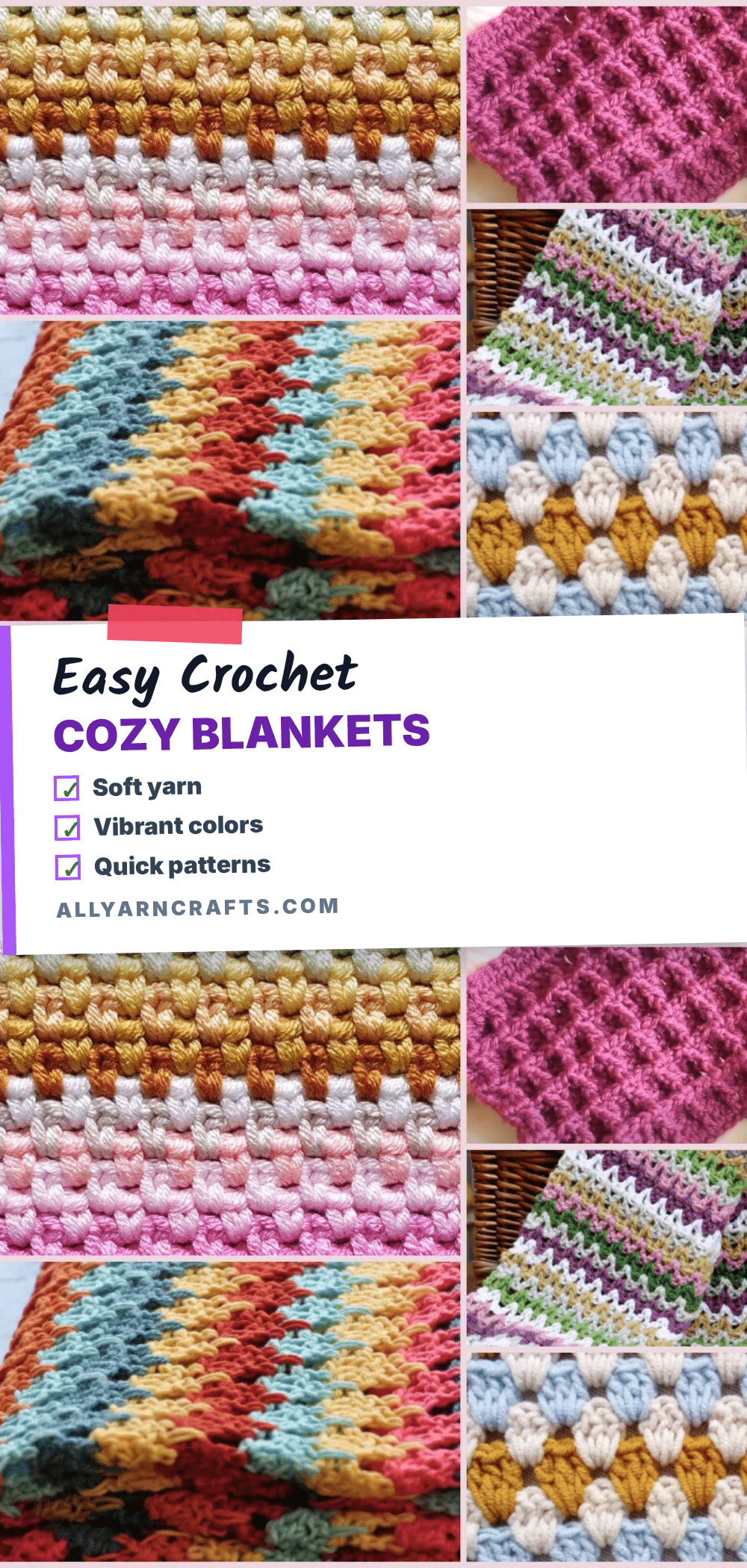
There is something deeply satisfying about the rhythmic repetition of crochet, especially when creating something as comforting as a blanket. The best blanket patterns often rely on stitch texture, shaping, rows or rounds, and the little details that make crocheters want to keep going. Whether you are looking for a quick throw for the sofa or a substantial afghan for the bed, the right stitch choice can transform a simple project into a tactile masterpiece.
Texture and Stitch Notes
When selecting a stitch pattern for a blanket, the goal is often to balance warmth with visual interest. Texture stitches, such as the moss stitch, basketweave, or simple shell clusters, add depth and dimension that flat stitches like single crochet lack. These textured patterns not only look beautiful but also create a denser fabric that provides better insulation against the cold. The “cozy” factor is often achieved through the interplay of raised bumps and recessed valleys in the fabric, which catch the light and invite touch. Choosing a soft, bulky yarn can further enhance these textures, making the finished blanket feel plush and inviting.
Project Overview
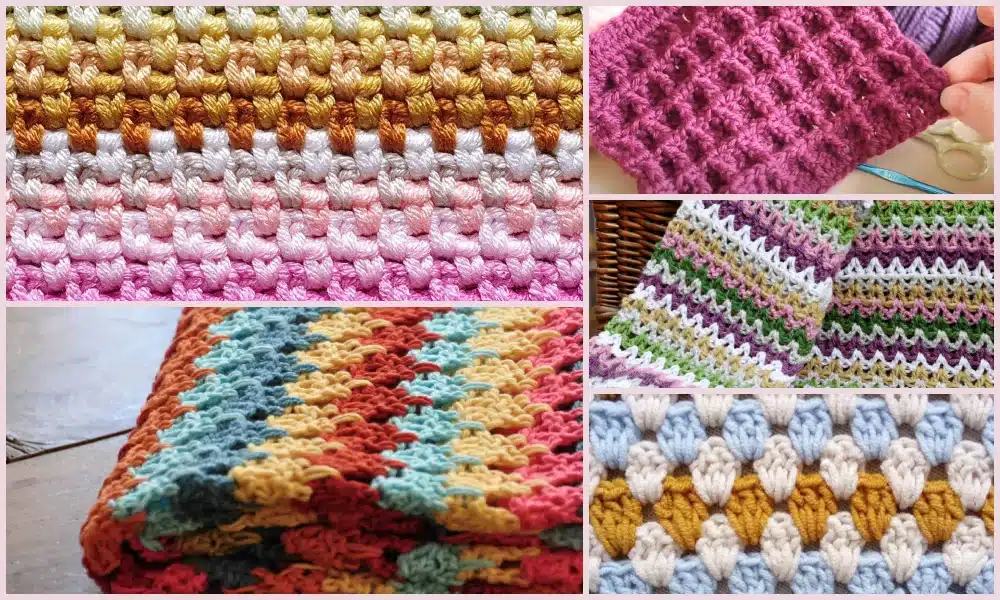
This collection features a variety of crochet stitches designed specifically for blankets. The patterns range from simple, beginner-friendly textures to more intricate designs that offer a meditative crocheting experience. Each stitch pattern is selected for its ability to create a warm, durable, and visually appealing fabric suitable for home decor.
Materials
While specific materials may vary by pattern, blanket projects generally require:
- Yarn: Worsted weight (Category 4) or Bulky weight (Category 5) yarns are most common for blankets. Acrylic, wool, or cotton blends are popular choices depending on the desired drape and washability.
- Crochet Hook: A hook size recommended by the yarn manufacturer, typically ranging from 5.0 mm (H-8) to 9.0 mm (M/N-13) depending on the yarn weight and stitch pattern.
- Yarn Needle: For weaving in ends.
- Stitch Markers: Helpful for keeping track of pattern repeats or corners.
Gauge and Finished Size
Gauge is critical in blanket making to ensure the final dimensions match your expectations. Always check the gauge specified in individual pattern instructions. Since stitch patterns vary in density, a pattern that calls for 12 stitches per 4 inches will yield a different result than one calling for 8 stitches per 4 inches. Finished sizes can range from small throw blankets (30″ x 40″) to large king-sized afghans (90″ x 90″).
Abbreviations
Standard crochet abbreviations are used in most blanket patterns. Common terms include:
- ch: chain
- st(s): stitch(es)
- sc: single crochet
- dc: double crochet
- tr: treble crochet
- sl st: slip stitch
- rep: repeat
Always refer to the specific pattern’s abbreviation list for any unique or modified stitches.
Pattern Notes
- Starting Chain: Remember that the starting chain usually counts as a stitch in the pattern. Check the instructions to see if the first chain should be counted or skipped.
- Turning Chains: Some patterns require a turning chain at the beginning of each row, while others use a different method to start the row. Follow the pattern’s specific guidance to maintain consistent height.
- Stitch Repeats: Most texture stitches are based on a multiple of stitches. Ensure your starting chain is a multiple of the required repeat plus any turning chains or edge stitches.
Pattern Instructions
Below are general guidelines for creating textured blanket stitches. Specific row-by-row instructions will depend on the chosen pattern.
Basic Textured Stitch Example
One popular method for creating a simple, cozy texture is the Moss Stitch (also known as Linen Stitch).
Foundation: Chain a multiple of 2 plus 1.
Row 1: Sc in the 2nd ch from hook, *ch 1, skip 1 ch, sc in next ch*; rep from * to * across, ch 1, turn. (Note: The first ch-1 counts as a st.)
Row 2: Ch 1, *sc in the next ch-1 space, ch 1, skip the next sc*; rep from * to * across, sc in the top of the turning ch from previous row, turn.
Repeat: Repeat Row 2 until the blanket reaches the desired length.
Shell Stitch Variation
For a more decorative edge, consider incorporating shell stitches.
Row 1: Ch 3 (counts as dc), 2 dc in same st, ch 1, *skip 2 sts, 5 dc in next st, ch 1, skip 2 sts*; rep across, end with 3 dc in last st, turn.
Row 2: Ch 3, dc in same st, *ch 1, 3 dc in next ch-1 space, ch 1, 3 dc in next ch-1 space*; rep across, end with dc in top of turning ch, turn.
Repeat: Continue alternating rows or following the specific pattern repeat.
Assembly
Most blanket patterns are worked in one piece. However, if you are making a blanket from squares (granny squares, blocks, etc.), assembly is required.
- Joining: Use a slip stitch or single crochet seam to join squares together. Place squares right sides together for a flatter seam, or wrong sides together for a raised seam.
- Border: A border can help even out edges and add a finished look. A simple single crochet or double crochet border worked evenly around the perimeter is a common choice.
Tips
- Block Your Work: Blocking can help even out stitches and set the shape of your blanket, especially if using natural fibers like wool.
- Consistent Tension: Try to maintain consistent tension throughout the project to ensure even rows and a uniform fabric.
- Yarn Choice: For beginners, lighter-colored yarns make it easier to see your stitches and identify mistakes.
- Measure Frequently: Measure your blanket periodically to ensure it is growing at the expected rate and to avoid running out of yarn.
FAQs
What is the easiest crochet stitch for a blanket?
The single crochet stitch is often considered the easiest, but for texture, the Moss Stitch or simple Double Crochet rows are very beginner-friendly and quick to work up.
How much yarn do I need for a blanket?
This depends on the size and stitch pattern. A typical throw blanket may require 1,500 to 2,500 yards of worsted weight yarn, while a larger afghan may need 3,000 to 5,000 yards or more.
Can I use any hook size for a blanket?
No, the hook size should match the yarn weight and the pattern instructions. Using a hook that is too small will make the fabric stiff, while a hook that is too large may result in a loose, floppy fabric.
How do I fix dropped stitches in a textured pattern?
Use a crochet hook to carefully pick up the dropped stitch and work it back up the column of stitches. Be careful not to unravel adjacent stitches in textured patterns.
Is it better to crochet a blanket in rows or rounds?
Most blankets are worked in rows to create a rectangular shape. However, some circular blankets or afghans are worked in rounds. The choice depends on the desired shape and pattern.
Pin This Crochet Pattern!